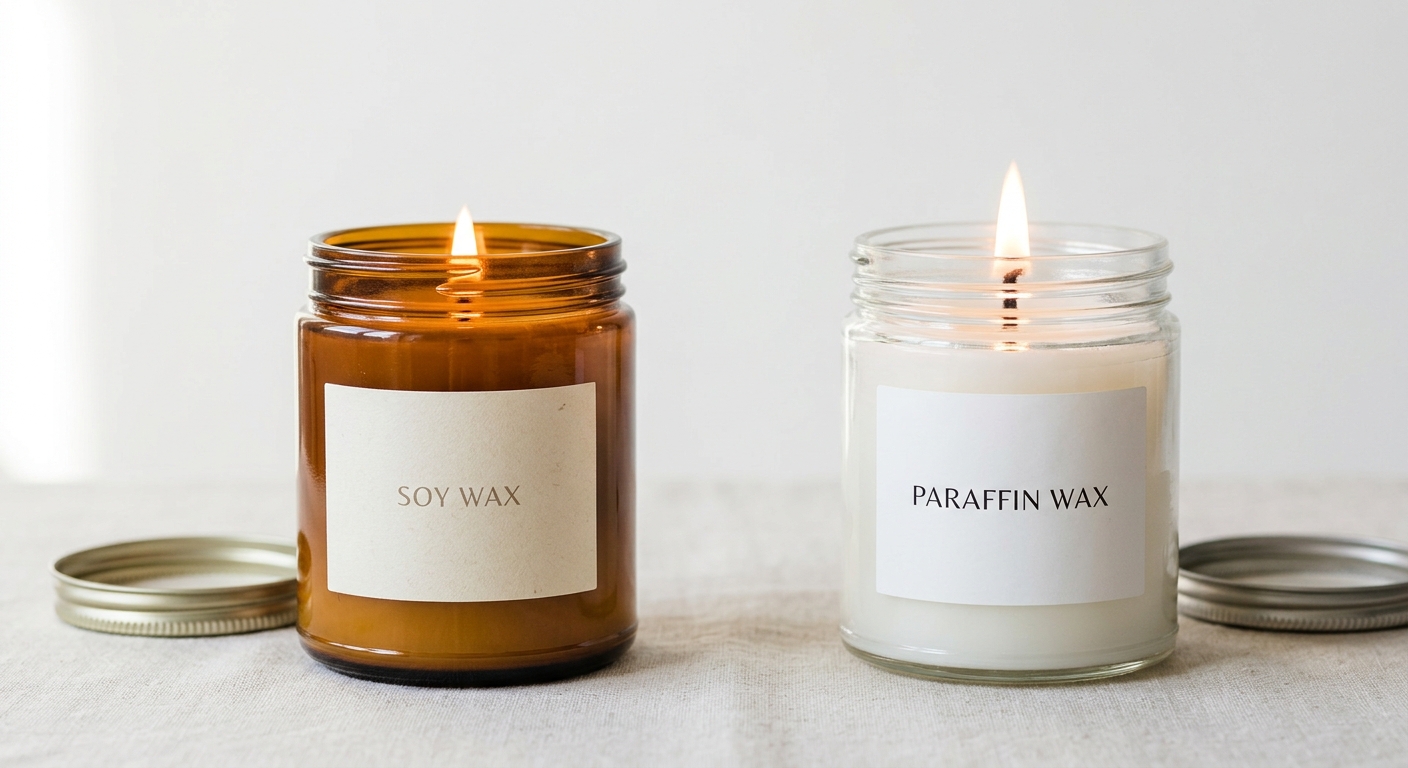
The Great Candle Debate
Walk into any candle store and you'll find shelves of beautiful candles at wildly different price points. The main difference? The type of wax. Soy wax and paraffin wax are the two most common candle materials, and the choice between them affects everything from burn time to air quality to environmental impact.
What Is Paraffin Wax?
Paraffin wax is a petroleum byproduct. It's created during the oil refining process — specifically, it's the slack wax that's left over after crude oil is processed into lubricating oil. This wax is then bleached, refined, and formed into candles. Paraffin is cheap, widely available, and holds fragrance well, which is why most mass-market candles use it.
What Is Soy Wax?
Soy wax is made from soybean oil. The oil is extracted from soybeans, hydrogenated, and turned into a solid wax. Soy wax is natural, renewable, and biodegradable. It was developed in the 1990s as an alternative to paraffin and has become increasingly popular as consumers seek cleaner-burning options.
Burn Time Comparison
Soy wax burns at a lower temperature than paraffin, which means it melts more slowly and lasts longer. A typical soy wax candle burns 30-50% longer than a paraffin candle of the same size. For example, a 6 oz soy candle may burn for 40 hours, while a comparable paraffin candle might last 25-30 hours.
- Soy wax: Burns cooler, slower, and more evenly
- Paraffin wax: Burns hotter and faster, may tunnel if not properly wicked
Scent Throw
Scent throw refers to how well a candle fills a room with fragrance. Paraffin is often praised for its strong scent throw because it holds more fragrance oil and releases it quickly at higher temperatures. However, soy wax has improved significantly in recent years, and a well-made soy candle with quality fragrance oils can fill a room just as effectively.
- Paraffin: Stronger initial throw, but can be overpowering
- Soy wax: Gentler, more consistent throw that lasts longer
Air Quality and Health
This is where the difference becomes significant. When paraffin candles burn, they release small amounts of soot and volatile organic compounds (VOCs) including toluene and benzene — both known carcinogens. While the amounts are small and generally considered safe in well-ventilated spaces, regular burning of paraffin candles in enclosed rooms can contribute to indoor air pollution.
Soy wax, by contrast, produces minimal soot and does not release the same harmful compounds. The natural composition of soy wax means it burns cleaner, making it a better choice for people with asthma, allergies, or sensitivities to synthetic materials.
- Paraffin: Releases soot, VOCs, and may aggravate respiratory conditions
- Soy wax: Burns clean with minimal soot, safer for indoor air quality
Environmental Impact
Paraffin is a non-renewable resource derived from petroleum. Its production contributes to oil dependency and environmental degradation associated with fossil fuel extraction. Soy wax, on the other hand, is made from a renewable crop that can be replanted each year. Soybeans are grown domestically, reducing transportation emissions.
- Paraffin: Non-renewable, petroleum-derived, not biodegradable
- Soy wax: Renewable, plant-based, biodegradable, supports agriculture
Cost Comparison
Paraffin candles are generally cheaper because paraffin wax is an inexpensive byproduct. Soy candles cost more due to the higher cost of soy wax and the smaller-batch production methods typically used. However, when you factor in the longer burn time of soy candles, the per-hour cost is often comparable.
Conclusion
When you compare soy wax and paraffin candles across burn time, air quality, environmental impact, and overall experience, soy wax is the clear winner. It burns longer, cleaner, and more sustainably. The slightly higher upfront cost is offset by longer burn times and the peace of mind that comes from knowing you're not breathing petroleum byproducts in your home. At Shop Aromiel, we use only 100% natural soy wax because we believe your home fragrance should be as clean as it is beautiful.