The Sleep Crisis
According to the CDC, about 70 million Americans suffer from chronic sleep problems. Whether it's difficulty falling asleep, staying asleep, or waking up feeling unrefreshed, poor sleep affects every aspect of health — from immune function to mental clarity to emotional regulation. While there's no single solution, essential oils offer a natural, non-habit-forming way to improve sleep quality.
How Essential Oils Affect Sleep
Essential oils work through your olfactory system — the same pathway that connects scent to memory and emotion. When you inhale calming essential oils, the molecules interact with your brain's limbic system, which controls the stress response. By reducing cortisol and promoting the production of sleep-supporting neurotransmitters like GABA, certain oils can help your body transition from alert to restful.
Top Essential Oils for Sleep
1. Lavender
Lavender is the most researched essential oil for sleep. Multiple clinical studies have shown that lavender aromatherapy improves sleep quality, reduces the time it takes to fall asleep, and decreases nighttime awakenings. Its sedative properties come from linalool and linalyl acetate, compounds that have a calming effect on the central nervous system.
2. Bergamot
Bergamot is a citrus oil, but unlike other citrus oils that energize, bergamot has unique calming properties. It reduces anxiety and stress while promoting relaxation. Bergamot works particularly well when blended with lavender — the combination is more effective than either oil alone.
3. Frankincense
Frankincense has been used in meditation and religious ceremonies for thousands of years. Its deep, resinous scent grounds the mind and slows breathing, making it easier to transition into sleep. Frankincense is especially helpful for people whose sleep issues are rooted in anxiety or racing thoughts.
4. Cedarwood
Cedarwood oil contains cedrol, a compound that has been shown to promote sleep by increasing parasympathetic nervous system activity. Its warm, woody scent creates a cocoon-like atmosphere that's perfect for bedtime.
5. Roman Chamomile
Chamomile isn't just for tea. Roman chamomile essential oil has similar calming properties and is particularly effective for children and people with sensitive systems. Its gentle, apple-like scent is soothing without being overpowering.
How to Use Essential Oils for Sleep
Diffusion
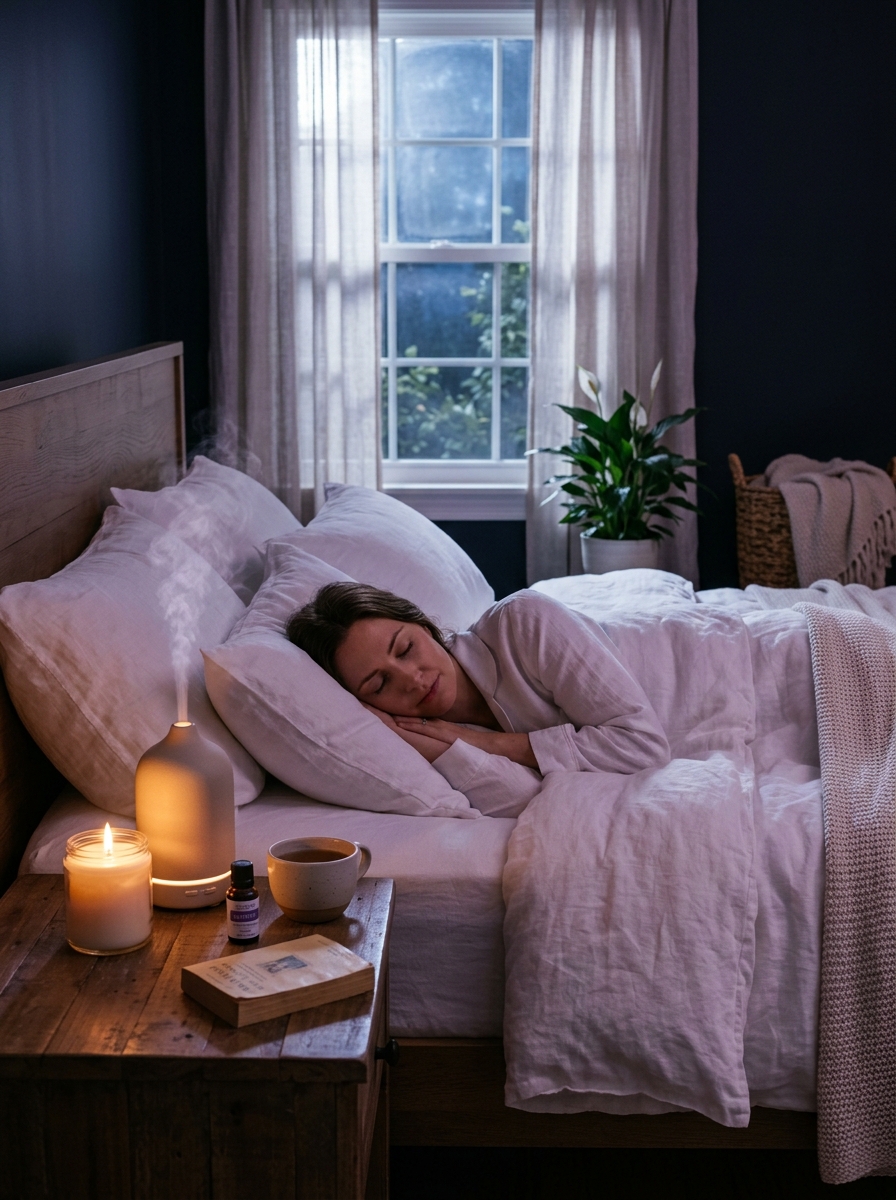
The most effective method for sleep is diffusion. Add 4-6 drops of your chosen oil (or a blend) to a diffuser and run it 30 minutes before bedtime. Place the diffuser in your bedroom, not too close to your bed. Most diffusers have auto shut-off, so they'll stop once the water runs out.
Topical Application
Essential oils can be applied to the skin, but they must be diluted with a carrier oil first. Mix 2-3 drops of essential oil with a tablespoon of carrier oil (jojoba, coconut, or sweet almond) and apply to your wrists, temples, or the soles of your feet before bed.
Pillow Spray
Create a simple pillow spray by combining 10-15 drops of lavender oil with water in a small spray bottle. Lightly mist your pillow and sheets 5 minutes before getting into bed.
Creating a Bedtime Aromatherapy Routine
- 30 minutes before bed: Start your diffuser with a calming blend
- 20 minutes before bed: Take a warm bath with 5 drops of lavender oil
- 10 minutes before bed: Apply diluted chamomile oil to your wrists
- At bedtime: Lights out, phone away, let the scent do its work
Recommended Sleep Blends
- Deep Sleep: 3 drops lavender + 2 drops bergamot + 1 drop cedarwood
- Calming Mind: 3 drops frankincense + 2 drops lavender
- Gentle Rest: 2 drops Roman chamomile + 2 drops lavender + 2 drops bergamot
Safety Considerations
Essential oils are generally safe when used correctly, but keep these guidelines in mind:
- Never apply undiluted oils directly to skin
- Keep oils away from children and pets
- Pregnant women should consult a doctor before using essential oils
- If you have asthma or allergies, start with a single oil and monitor your reaction
Conclusion
Essential oils are a powerful, natural tool for improving sleep quality. The key is consistency — using the same oils in the same way each night creates a Pavlovian response that signals to your brain that it's time to sleep. Start with lavender, the most well-researched and universally tolerated sleep oil, and experiment with blends as you discover what works best for your body. With regular use, you may find that falling asleep becomes easier, staying asleep becomes more natural, and waking up feels more refreshing.